Research
Historical Southern Ocean Climate Trends
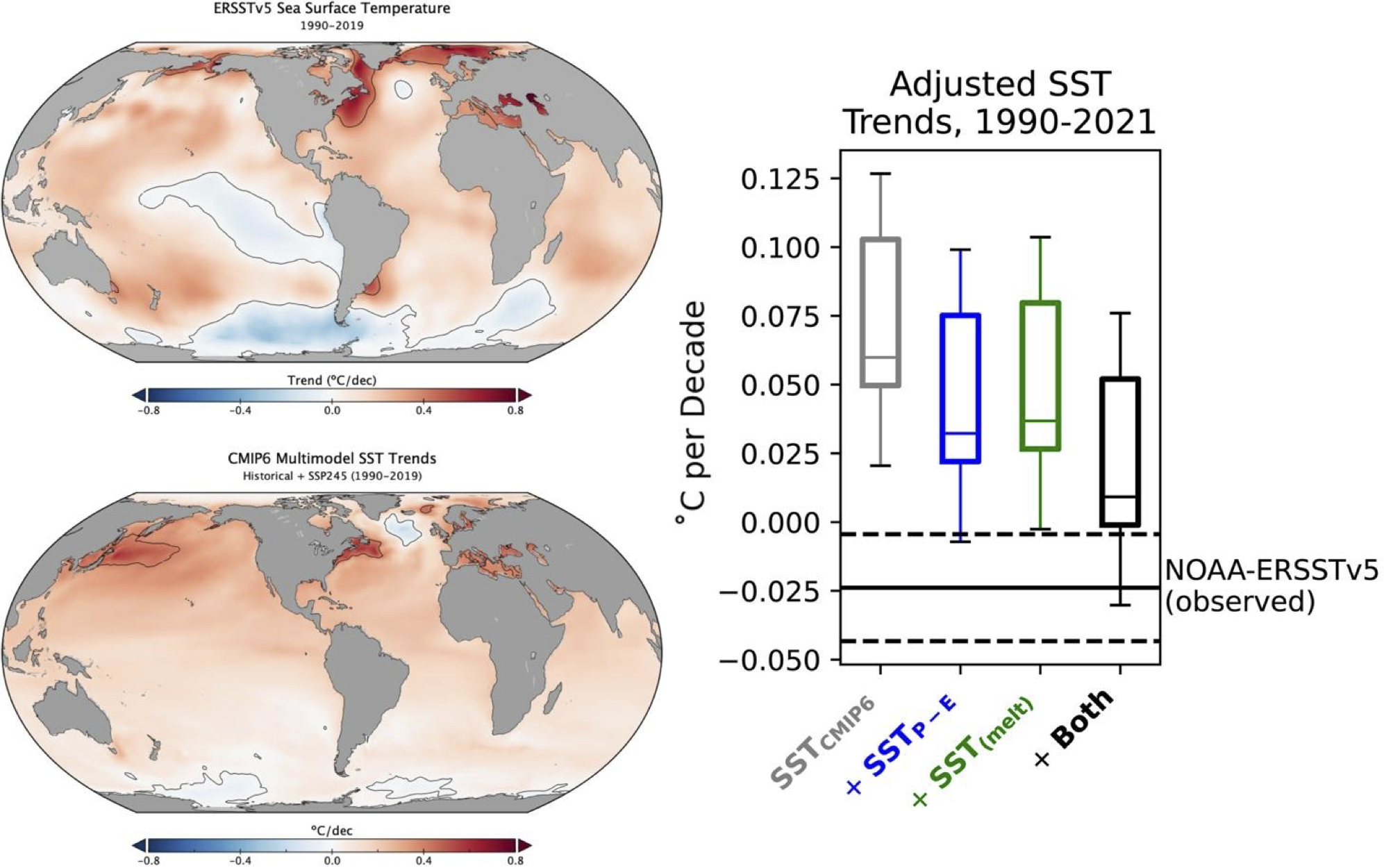
While most of Earth's surface has warmed over the satellite era, the Southern Ocean sea surface experienced a prolonged cooling trend. One proposed driver of this anomalous cooling is the increasing flux of freshwater into the Southern Ocean, which restricts the exchange of surface waters with warmer waters at depth. I led a collaboration with the Southern Ocean Freshwater Input from Antarctica initiative (SOFIA, https://sofiamip.github.io/) to quantify the impact of underestimated Antarctic meltwater on Southern Ocean sea-surface temperatures in climate models. I show that this missing meltwater helps explain the models’ inability to reproduce observed trends over recent decades.
High-Resolution Modeling at the Antarctic Margin
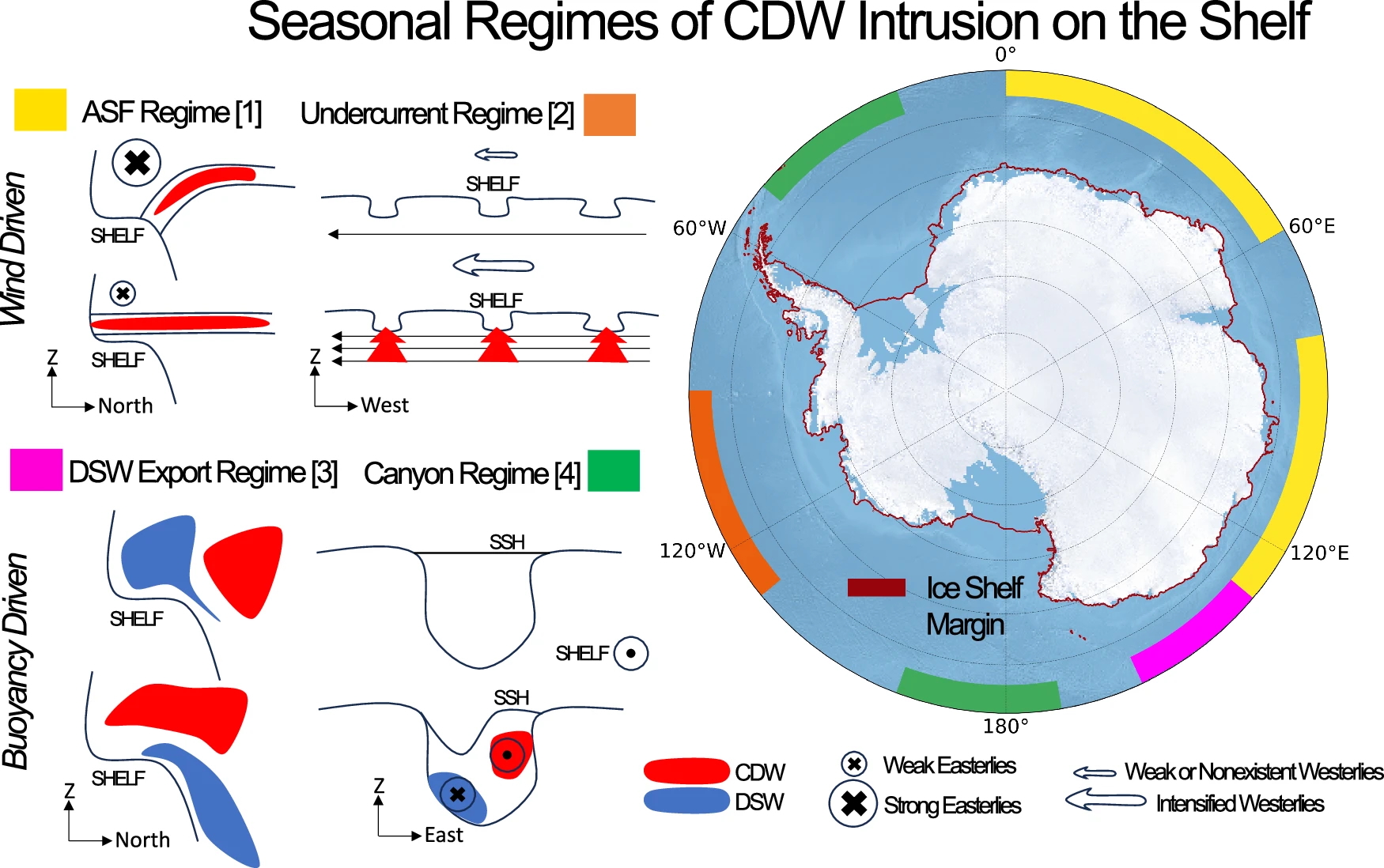
High-resolution models have recently become able to explicitly resolve thermodynamically active ice-shelf cavities at the Antarctic margin, offering a unique opportunity to investigate the potential feedbacks (positive or negative) between ice sheet melt and ocean circulation. I currently am working with a high-resolution configuration of the Southern Ocean State Estimate (SOSE, https://sose.ucsd.edu/) to investigate the relationship between the Antarctic slope current and the on-shore transport of warm water masses that lead to ice sheet mass loss.
Data-Driven Methods to Improve Climate Predictability
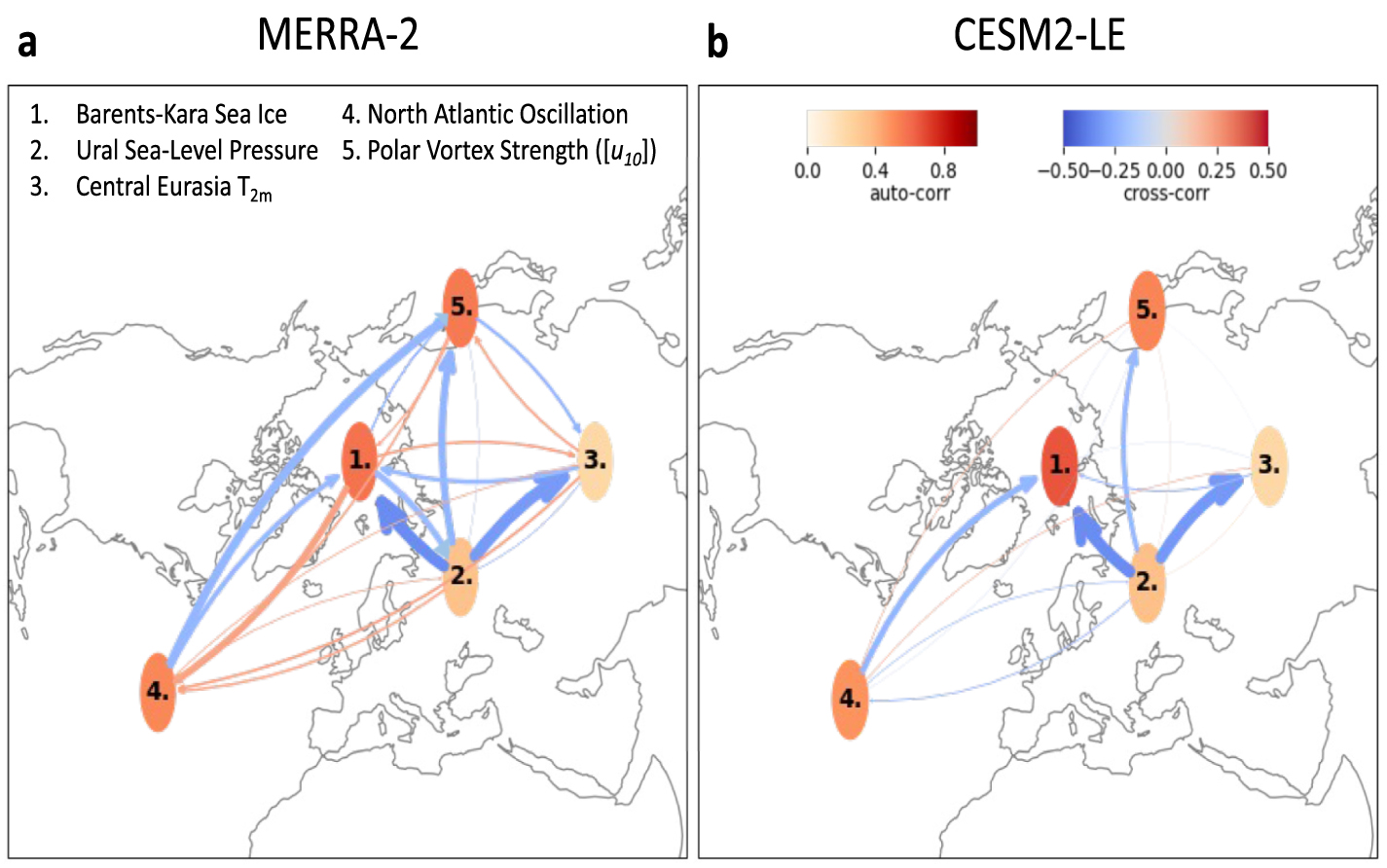
Traditionally, constraining the climate response to an individual forcing requires isolated perturbation experiments to be performed with climate models. To separate signal from noise and account for internal variability, this also requires performing an ensemble of experiments with differing initial conditions. Such efforts are computationally expensive and require coordination amongst a large number of modeling centers. I address this challenge with causal inference techniques, which quantify underlying interdependencies among any set of time series variables, observational or simulated, without requiring isolated perturbation experiments.